
How Do Porta Potties Work?
Picture a plastic box about 44 by 48 inches on the ground and 92 inches tall. Underneath the seat sits a holding tank, sealed off from the outside, holding 60 to 70 gallons depending on the model. When you sit down, there's no flush valve like a home toilet. Waste drops straight into the tank, where a chemical deodorizer, usually a blue formula, starts breaking down solids and knocking down smell right away. That's the whole mechanism. No plumbing, no septic line, no water tank feeding it, which is also how a porta john rental or any portable restroom rental unit stays simple to place. This is why a standard porta potty rental works anywhere in El Monte, from a construction lot to a backyard graduation party, without anyone digging a trench first.
Vent stacks built into the roof pull odor up and out rather than back toward the seat. Toilet paper holders and hand sanitizer dispensers are standard on most units, the kind you'd see across any porta potty rental in El Monte job. For a construction worker on break, the whole visit takes under two minutes: open, sit, done, no waiting on water pressure or a septic line to catch up. If you're trying to figure out how many you'd need for a crew, the how many porta potties do I need guide walks through OSHA's ratio, which requires 1 toilet for every 20 workers under OSHA 1926.51(c)(1) on construction sites.
How Does a Portable Sink Work?
A portable sink runs on a self-contained system: a fresh water tank, usually gravity-fed or foot-pump powered, a soap dispenser, and a gray water tank underneath to catch runoff. Nothing connects to a building. You fill the fresh tank before an event or job start, and a service tech drains the gray tank and refills fresh water on the same schedule as your toilets. Under 29 CFR 1910.141(d)(2), washing facilities need actual soap and towels or a hand dryer, not just sanitizer, so a real handwashing station rental or portable sink rental matters if you're trying to meet that standard on site. Some crews add a hand sanitizer station rental as a supplement, but it doesn't replace the sink requirement, and the handwashing requirements page spells out why.
If your crew is applying paints, coatings, herbicides or insecticides, OSHA 1926.51(f)(1) kicks in separately and requires washing facilities for that contamination risk specifically. That's a different trigger than general sanitation. Farm operations in and around El Monte fall under a related rule, OSHA 1928.110, which calls for field sanitation within a quarter mile walk for hand-labor employees. See farm and agricultural restrooms for how that plays out on working land.
How Do Flushable Porta Potties Work?
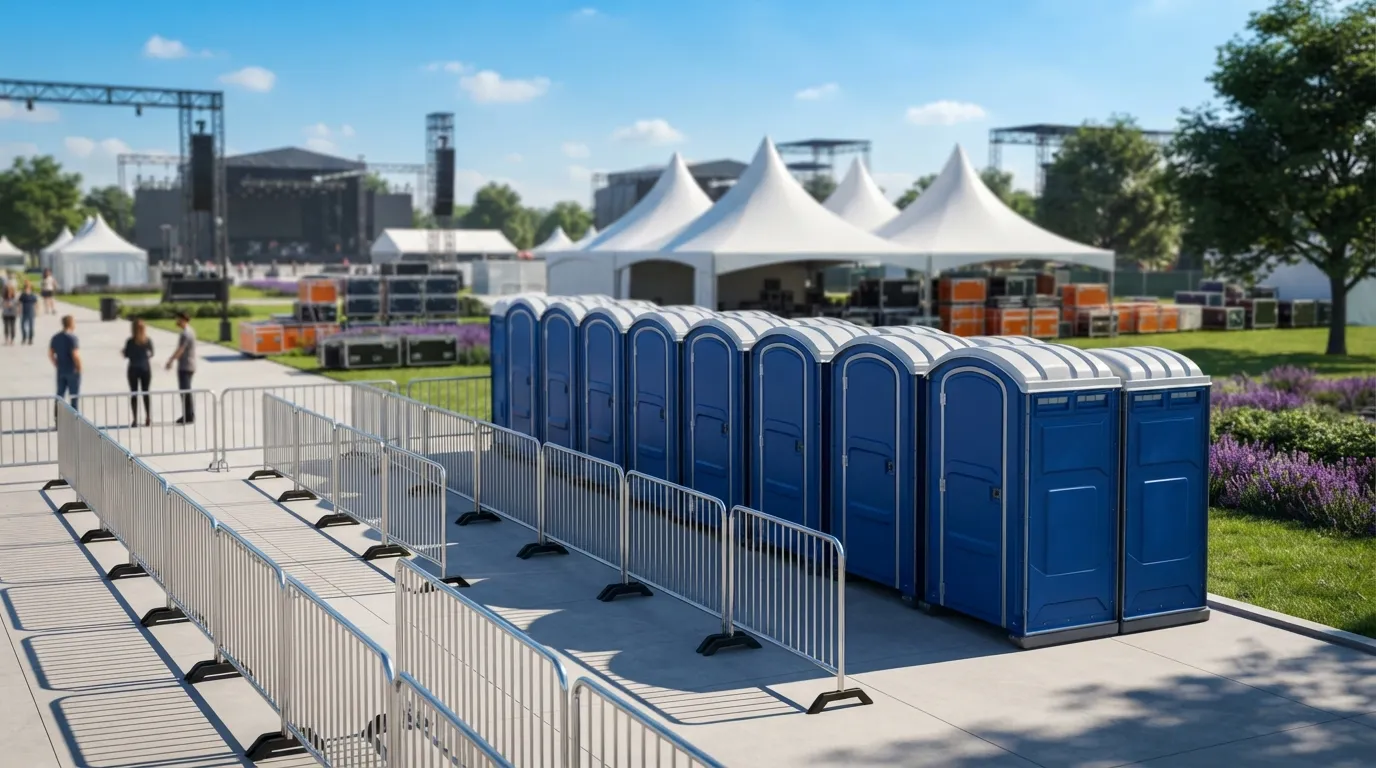
A flushable unit, often called a deluxe model, adds a small fresh water tank and a foot pump or hand pump that pushes a rinse of water into the bowl after use, flushing waste down into the holding tank below. It feels closer to a home bathroom: a real flush action, sometimes a sink built in, sometimes interior lighting. The deluxe flushable porta potty still uses the same sealed holding tank underneath, so it needs the same pump-out schedule as a standard unit. These run higher than a standard rental because of the added plumbing, and they're common at wedding restroom rental bookings and upscale events where guests expect more than a bare bones unit. Check the porta potty rental cost breakdown if you're comparing standard against deluxe for a specific date.
ADA-compliant units work the same way internally but are built bigger, with a 60 inch turning circle per ADA Standards 304.3.1 and a clear door opening of at least 32 inches under ADA Standards 404.2.3. If you're clustering multiple units at a festival or fairground, ADA Standards 213.2 requires at least 5 percent of the cluster to be accessible units, never fewer than one. The ADA accessible porta potty page has the full spec list, and the ADA restroom requirements guide covers the rest of the standard.
How Do Camping Porta Potties Work?
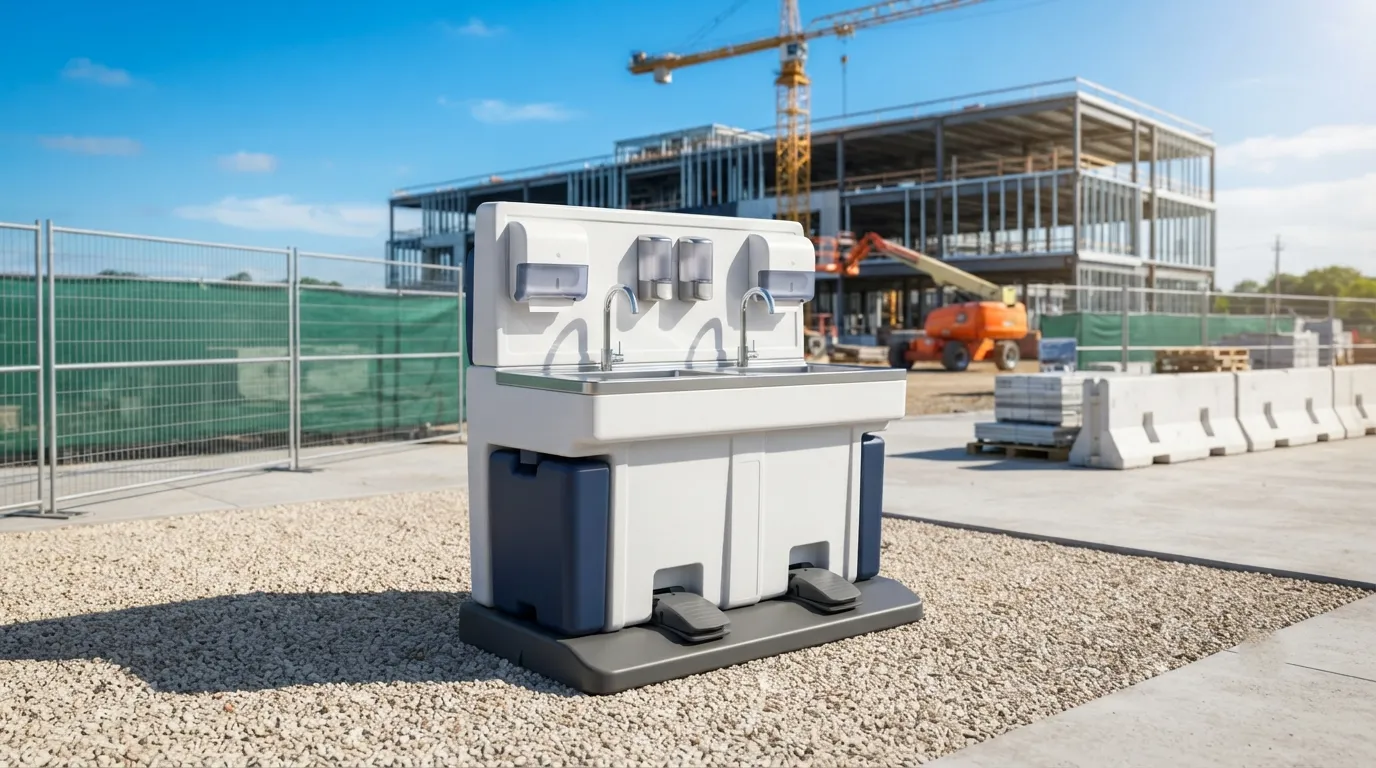
Camping units work on the same sealed-tank principle, just built smaller and lighter for sites without road access or in remote spots around El Monte's outlying areas. Some camping setups use holding tanks in the same 60 to 70 gallon range as standard job site units, others run smaller portable cassette-style toilets that you empty by hand at a dump station. The camping porta potty option through El Monte Porta Pros still gets serviced on a route, so even a unit dropped somewhere with tight access gets pumped on a normal cycle. If you're near Baldwin Park, 3.6 miles east, or Temple City, 3.9 miles northwest, delivery routes cover those distances without issue.
Service techs use a vacuum truck to pump tanks, same chemical process as job site units, and they restock toilet paper and chemical deodorizer each visit. ANSI/PSAI Z4.3 sets the baseline service interval at once per week for up to 10 users across a 40 hour week, which is why most residential and small event rentals get serviced weekly unless usage is heavier. For big crews or multi-day events, emergency porta potty rental covers same-day drops if a unit fills faster than expected, and construction site services can bundle that with the rest of a job site setup.
How often does a porta potty need to be pumped?
Most units get pumped weekly under the ANSI/PSAI Z4.3 baseline, built for up to 10 users over a 40 hour week. Heavy-use construction sites or multi-day events often need more frequent visits. See how often are porta potties cleaned for a fuller breakdown by use case.
What chemicals go into a porta potty?
A blue deodorizing chemical, added to the holding tank, breaks down solid waste and controls odor between service visits. It's not the same as septic tank cleaning chemicals used in a home system, which is its own process covered on the septic tank cleaning page. Service techs refill it during each scheduled pump-out.
Do porta potties need water or electricity hookups?
No. A porta potty is fully self-contained, with no plumbing or power connection needed. That's why units can go almost anywhere in El Monte, from a paved lot to open ground, as long as a service truck can reach it.
How close does a porta potty need to be to a septic or sewer line?
It doesn't. The sealed tank holds waste until a vacuum truck pumps it out, so no line connection is needed at all. Placement depends more on ground stability and truck access, the same factors covered in porta potty permit requirements; see the porta potty placement guide for details.
Can a construction worker use a porta potty without walking far?
Yes, and OSHA 1926.51(c)(1) is built around that idea, setting toilet ratios by crew size on site. Placement should keep travel short for every worker. The OSHA portable toilet requirements page covers exact ratios by headcount.
Next step
Get a delivery date
Tell us the address, the dates and the headcount. We size the order and confirm the route.